A roof usually needs repairing rather than replacing if the problem is localised, such as a few slipped tiles, a failed flashing or a single leak, and the rest of the covering is sound. It is more likely to need replacing when problems are widespread, the tiles or slates are failing across the whole roof, or repeated repairs have stopped holding. An honest roofer will tell you which you are dealing with.
It is one of the most common questions we get asked on the Fylde Coast, and it is a fair one. A repair might cost a couple of hundred pounds, while a full re-roof runs into thousands, so knowing which you actually need matters. The honest answer is that it depends on whether the problem is contained to one area or spread across the whole roof. This guide walks you through the signs of each, what the work involves, and roughly what it costs, so you can make the right call for your home rather than paying for work you do not need.
When a Repair Is Enough
Plenty of roofs that look worrying from the ground only need a repair. The test is simple: is the problem in one place, with the rest of the covering still sound? If so, a well-judged repair can add years to the roof's life. These are the signs a repair is usually all you need.
- A few slipped or cracked tiles: A handful of tiles or slates that have slipped, cracked or blown off in the wind can normally be refixed or replaced without touching the rest of the roof.
- A single leak in a known spot: If water is coming in at one point and you can trace it to a specific area, the cause is often a local one, such as a cracked tile or a lifted flashing, rather than the whole roof.
- A failed flashing: Lead flashing around chimneys, valleys and abutments is a common failure point. Renewing the leadwork in that spot fixes the leak while the rest of the roof carries on.
- Blocked or leaking valleys and gutters: Water getting in because a valley or gutter is blocked or has failed is a maintenance job, not a reason to replace the roof.
- The covering is otherwise sound: If the tiles or slates across the main roof are in good order, with no widespread cracking, delamination or slippage, the roof has plenty of life left and a targeted repair makes sense.
In short, if the roof is generally in good shape and the trouble is confined to one area, a repair is almost always the right answer, and a small outlay to keep a sound roof watertight.
When a Roof Needs Replacing
A roof is more likely to need replacing when the problems are no longer in one place. Once the covering is failing across the whole roof, patching one area just moves the next leak along. These are the signs that point towards a full re-roof rather than another repair.
- Widespread failure: Tiles or slates cracking, crumbling or slipping across the whole roof, rather than in one spot, usually means the covering has reached the end of its life.
- Slates or tiles failing everywhere: Old slates can delaminate and go soft, and old concrete tiles lose their surface and become porous. When this is happening all over, replacement is the sensible long-term fix.
- Repeated repairs that no longer hold: If you have had the same roof patched several times and the leaks keep coming back in new places, you are paying repair money towards a roof that needs replacing.
- A sagging or dipping roofline: Visible sagging can point to trouble with the timbers or structure underneath, which needs proper inspection and usually a strip-back to put right.
- Daylight or damp in the loft: If you can see daylight through the boards, or the loft feels damp with staining on the timbers and felt, water has been getting past the covering for some time.
- A perished or missing underlay: On older roofs the felt beneath the tiles can perish and tear. Once the membrane has gone, the roof is relying on the tiles alone, and a re-roof restores that second line of defence.
If two or three of these ring true, it is worth having the roof surveyed properly before spending any more on repairs. A full replacement costs more up front, but on a roof that is failing across the board it is the option that actually solves the problem.
Not Sure Which One You Need?
Call Mark on 07910 742482 for free, honest advice across Blackpool and the Fylde Coast. Send a couple of photos with your enquiry and we can often give you an idea before we even visit.
Get a Free QuotationThe Fylde Coast Factor
Where you live makes a real difference to how a roof ages, and the Fylde Coast is a demanding place to keep a roof watertight. Salt-laden air, driving rain off the Irish Sea and strong onshore winds all work harder on a roof than they would inland.
- Wind and driving rain: Exposed coastal roofs take a battering, and wind can lift tiles and drive rain under coverings that would sit happily in a sheltered spot.
- Salt and weathering: Coastal air is tougher on fixings, flashings and older coverings, so roofs here can show their age a little sooner than the same roof would elsewhere.
- Storm damage: After a big blow it is worth a quick look. Slipped tiles, lifted ridges and displaced flashings are common, and catching them early keeps a repair small.
None of this means a coastal roof is doomed to an early replacement. It does mean it pays to keep on top of small jobs and to use fixings and detailing that are up to the exposure. When we re-roof on the coast we build for the conditions, with detailing and fixings chosen to suit the exposure.
What a Full Re-Roof Involves
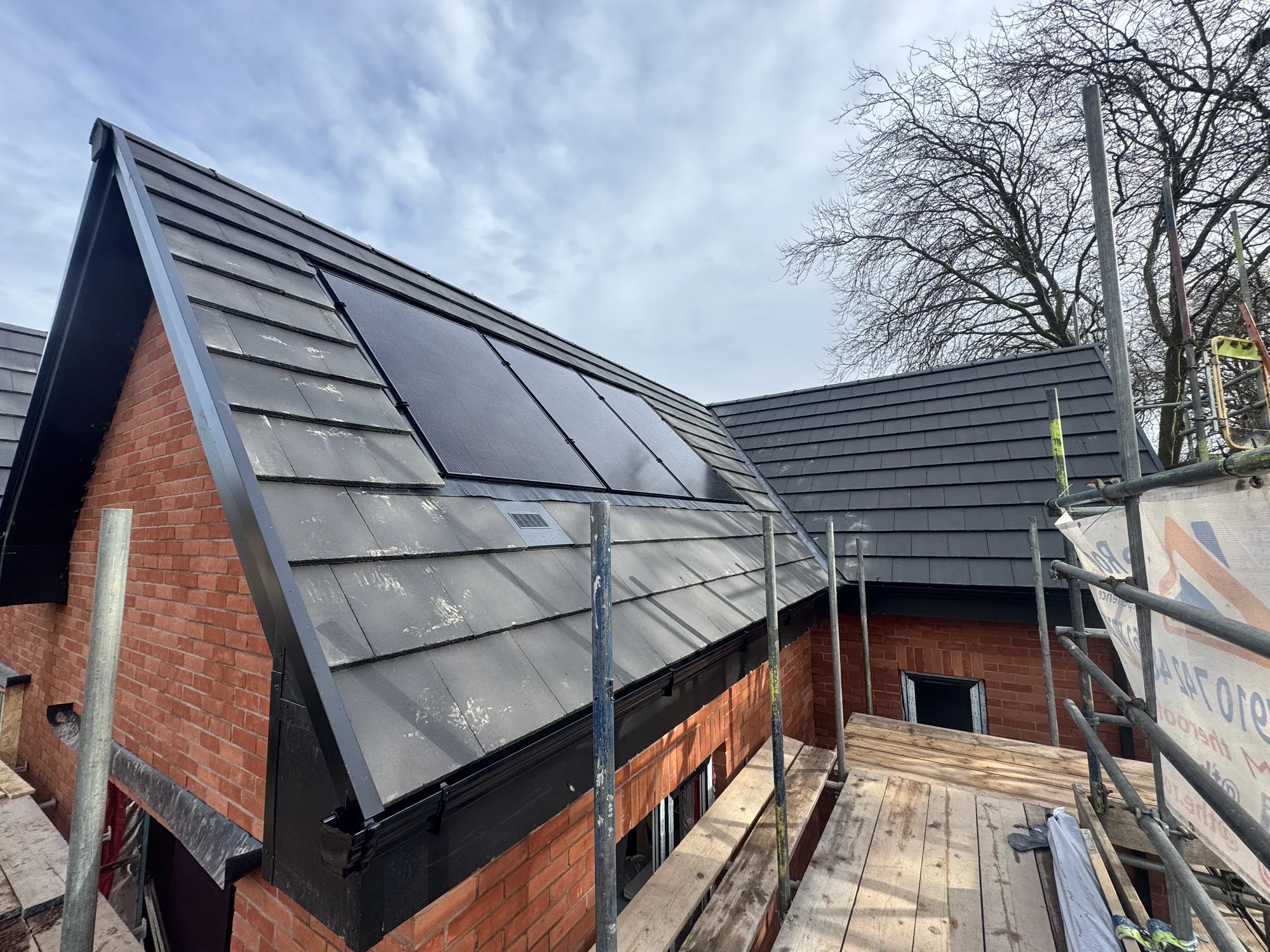
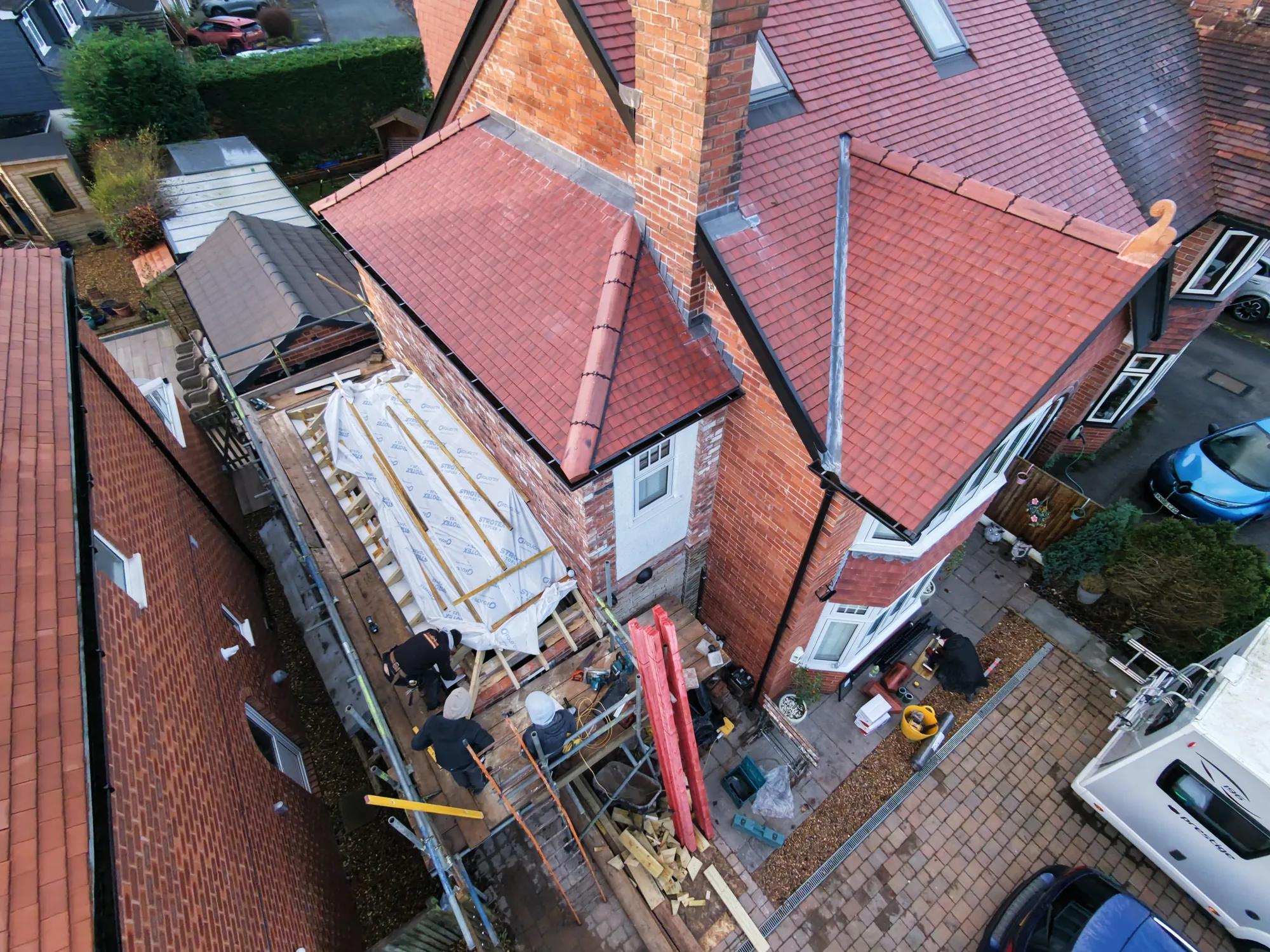
If a replacement is the right call, it helps to know what you are paying for. A proper re-roof is a rebuild, not a cover-up, and every layer is renewed from the timbers up.
- Strip back to the rafters: The old covering, battens and perished underlay come off so we can see and check the timbers underneath.
- New breathable membrane: A fresh breathable underlay goes on as the roof's second line of defence, letting the structure breathe while keeping water out.
- New treated battens: New battens are fixed at the correct gauge for your chosen tiles or slates, giving the covering a sound, even base.
- Your chosen covering: New tiles or slates are carefully set out so the courses run straight and the finish looks as good as it performs.
- Ridge and verge detail: The specified ridge and verge detail is fitted to suit the property, often with modern mechanically fixed dry systems in place of old mortar bedding where appropriate.
- Fresh leadwork: New lead flashings to the valleys, chimneys and abutments keep the roof watertight at its most vulnerable points.
Every job is individual, so timescales vary with the size and complexity of the roof, and you stay in your home throughout. Every re-roof and new roof we fit is backed by our 15-year workmanship guarantee, with the tiles, slates and membranes carrying their own manufacturer guarantees.
What Affects the Cost
Every roof is different, so rather than a one-size-fits-all price we give you a clear, fixed written quotation after a free initial assessment. These are the things that affect what a job costs.
- Size and pitch of the roof: A larger or steeper roof takes more material, labour and access equipment.
- The covering you choose: Concrete tile, clay tile, natural slate and fibre-cement slate all sit at different price points.
- Access and scaffolding: How easy the roof is to reach safely affects the setup required.
- Condition of the timbers: Any repairs needed to the structure once the old covering is stripped.
- Chimneys and leadwork: Any chimney work, flashings or valleys the property needs.
The thing worth remembering is the maths over time. If you are spending on the same roof year after year and the leaks keep returning, those repair bills are quietly adding up towards a re-roof that would have solved the problem for decades. A good roofer will help you weigh that up honestly.
How to Get an Honest Answer
The hardest part for a homeowner is knowing whether the advice they are given is straight. Roofing has more than its share of cowboys, and being told you need a full new roof when a repair would do is an expensive way to find out. Here is how to make sure you are getting an honest assessment.
- Ask for it in writing: A proper roofer will survey the roof and give you a clear written quote setting out what needs doing and why, not a figure scribbled on the spot.
- Ask what happens if you only repair: A good roofer will happily explain the case for a repair as well as a replacement, and tell you honestly how long each is likely to last.
- Be wary of pressure: Honest advice does not come with a hard sell or a today-only price. If someone is pushing you to decide on the spot, that is a reason to pause.
- Look for evidence, not just opinion: Photos of the actual problem, taken up on the roof, are worth far more than a worrying description from the ground.
That honest approach is exactly how we work. If your roof only needs a repair, we will tell you, and if it is genuinely near the end of its life, we will say that too and set out your options. We would always rather give you the right advice than sell you work you do not need, and it is a big part of why our customers rate us 5.0 across 30 Google reviews.
Frequently Asked Questions
The quickest guide is whether the problem is in one place or spread across the whole roof. A few slipped tiles, a single leak or a failed flashing, with the rest of the covering sound, usually points to a repair. Widespread cracking or slipping, repeated repairs that no longer hold, sagging, or damp and daylight in the loft point towards a replacement. A proper survey confirms which you are dealing with.
It can be. If you are paying for the same roof to be patched again and again and new leaks keep appearing, those repair bills add up towards a re-roof that would have solved the problem for decades. On a roof that is failing across the board, a full replacement is usually the better value over time. On a sound roof with one local fault, a repair is the sensible choice.
On a roof that is otherwise in good order, a well-done repair can last many years, effectively as long as the surrounding covering. On a roof that is near the end of its life, a repair is more of a short-term measure, because the next failure is likely to come along elsewhere. We will always tell you honestly which situation you are in so you can decide with your eyes open.
Yes, always. If a roof is near the end of its life and a repair would only be a short-term fix, we will tell you straight and set out your options, including a full replacement, so you can make the right decision for your home. Equally, if your roof only needs a repair, we will not try to sell you a new one. Honest advice is the whole point of how we work.